How do children and adolescents in Ukraine view their professional future, what influences their choices, and do they see opportunities for professional fulfilment in their community, region, and the country as a whole?
To answer these questions, the Swiss-Ukrainian DECIDE Project, jointly with the Kyiv International Institute of Sociology (KIIS), conducted a national survey on the educational and career expectations of children and teenagers as part of a national pilot project for a career guidance system for children and adolescents, the quantitative phase of which ran from December 2025 to March 2026..
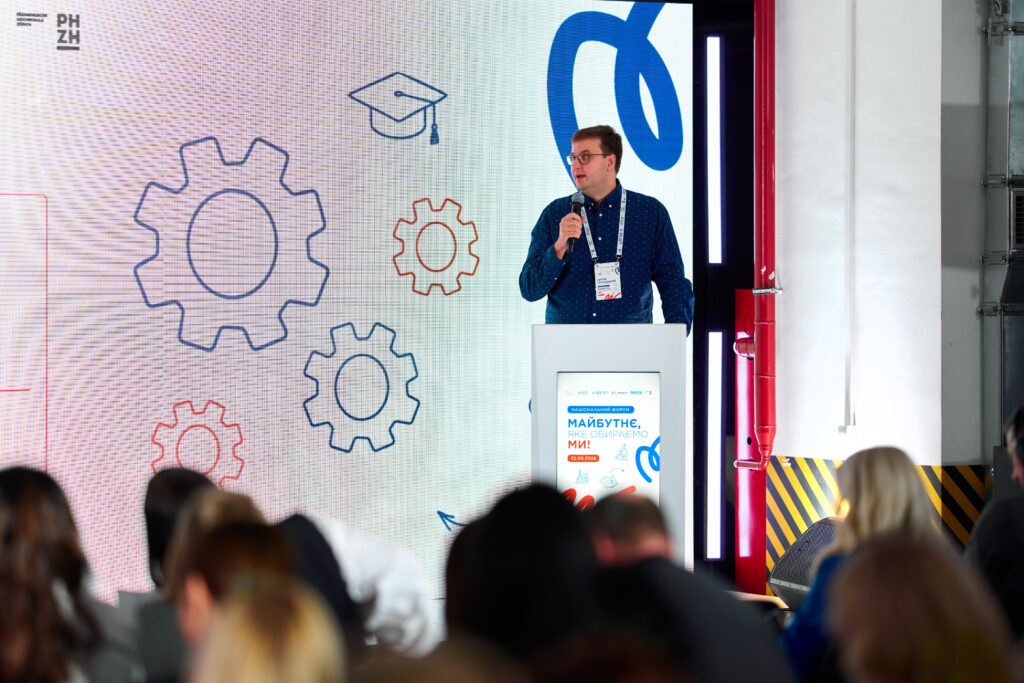
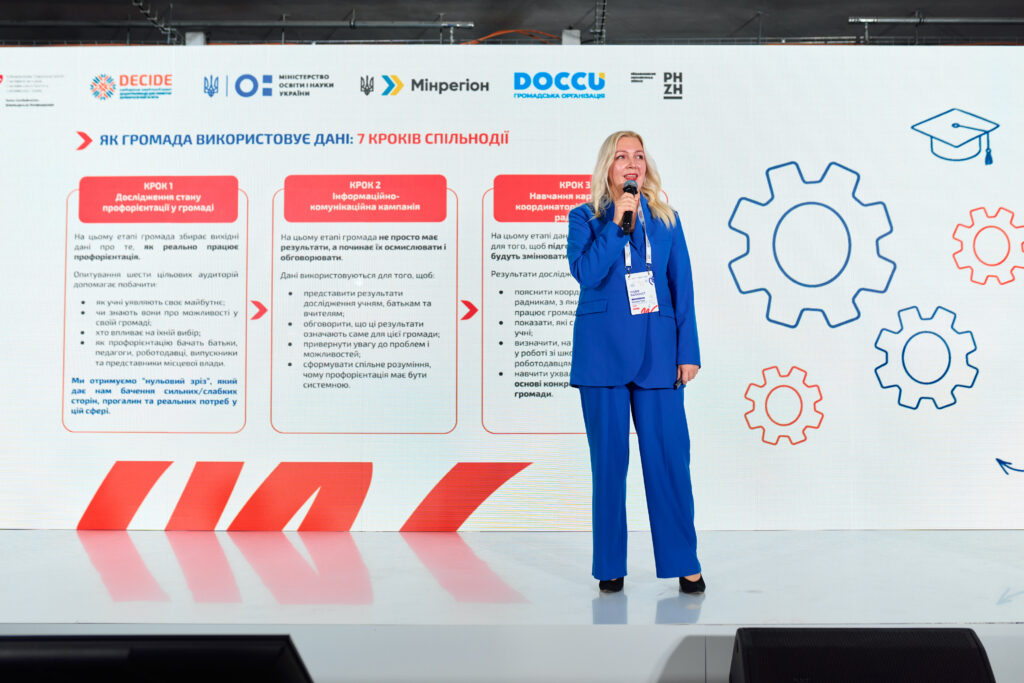
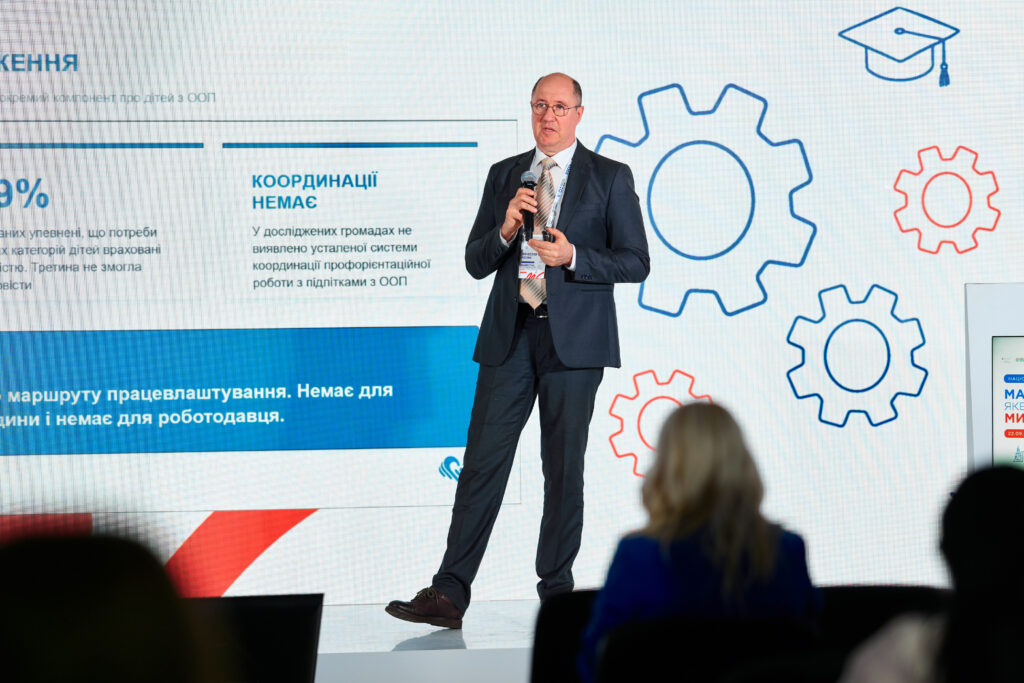
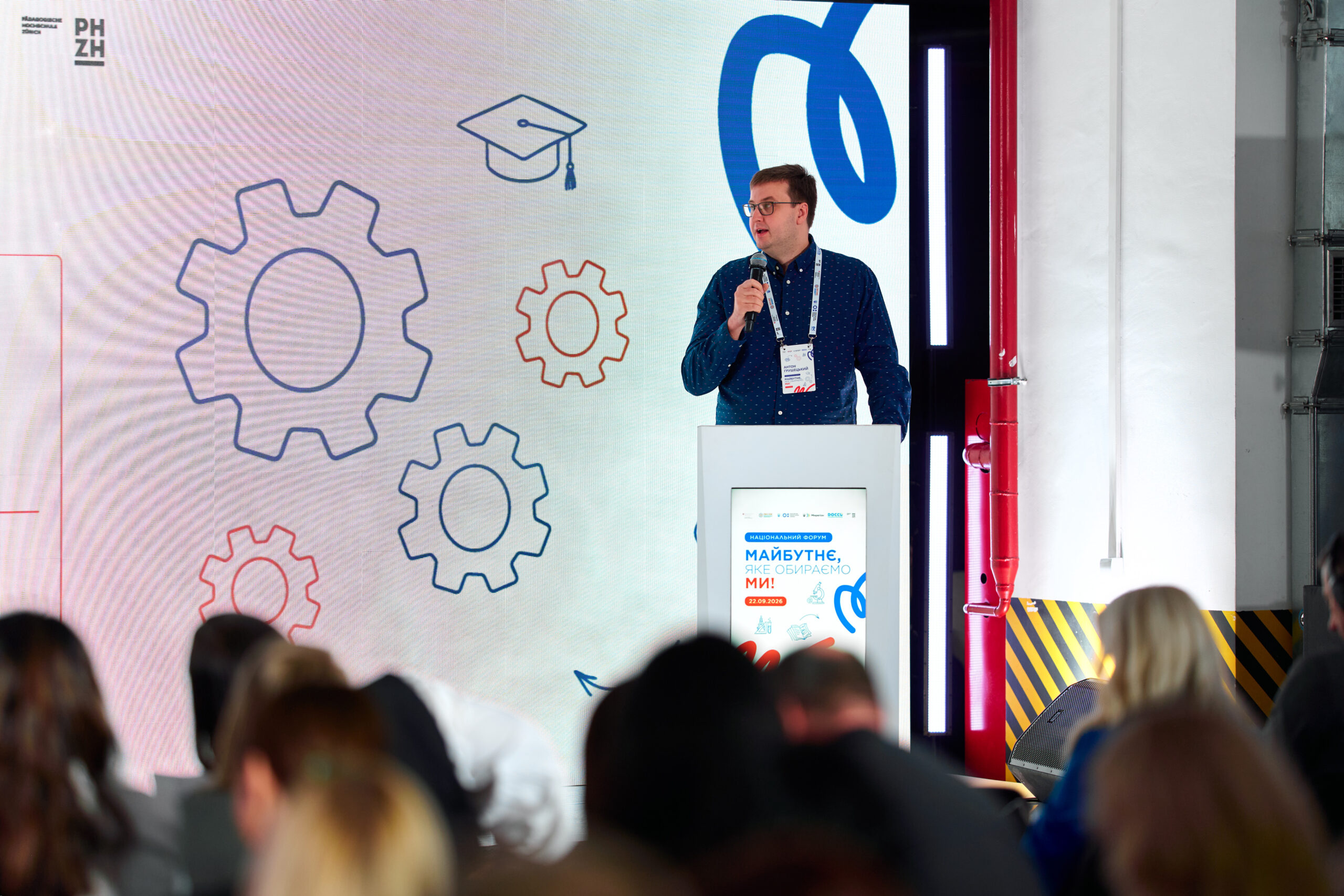
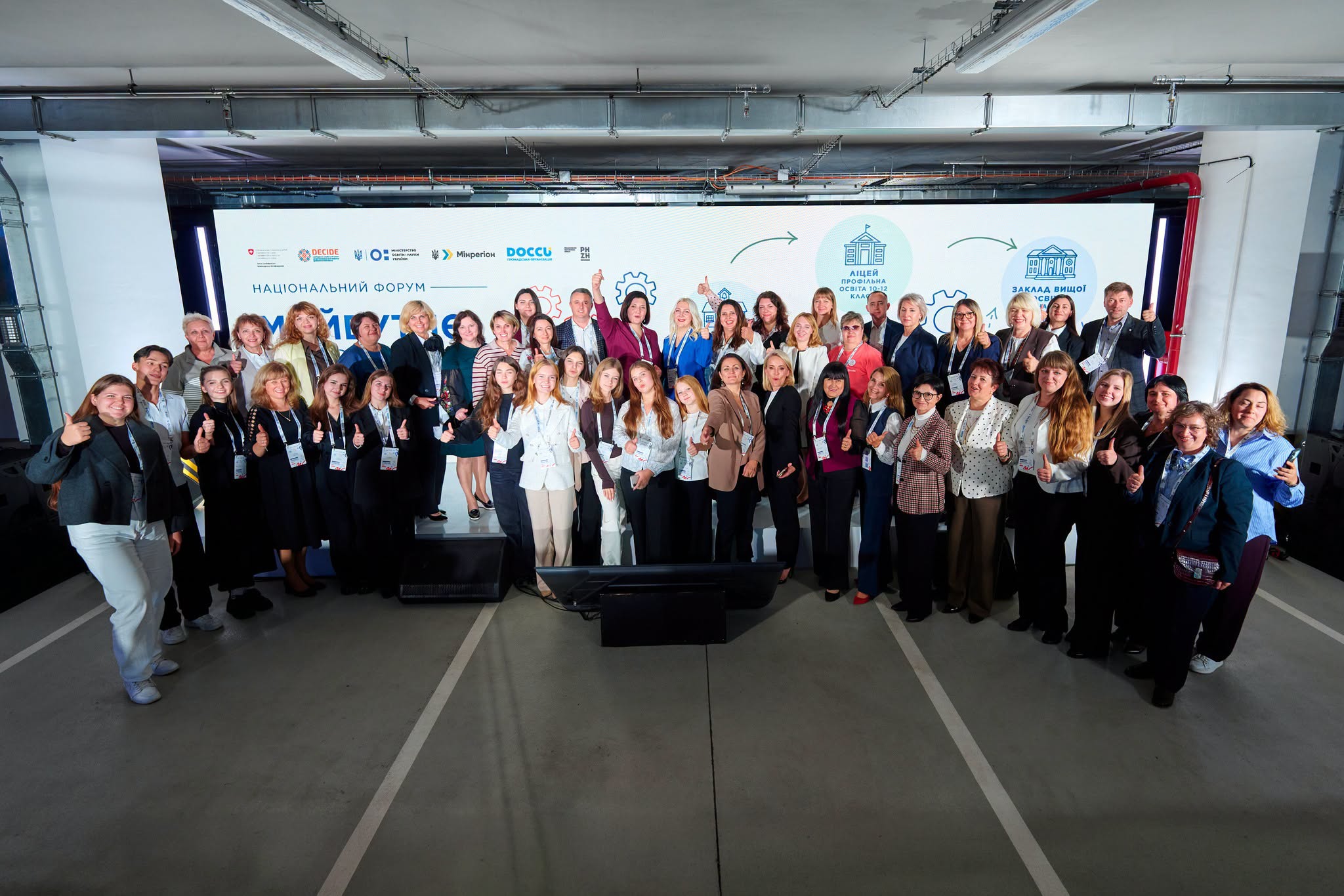
During the National Forum «The Future We Choose!», experts from DECIDE and KIIS presented the key findings of this study, in which around 387,000 respondents took part – pupils, parents, teachers, heads of educational institutions, representatives of local governments, and employers.
What the study revealed:
- Only 18% of teenagers see opportunities for professional fulfilment in their own community, while up to 60% plan to live and work abroad or are considering such a possibility.
- 75% take future salary into account when choosing a profession, whilst 65% consider their interests and the opportunity for self-fulfilment. At the same time, over 80% believe that success can be achieved through a blue-collar profession.
- 65% of teenagers learn about professions from social media, 51% from their families and 25% during school lessons and extracurricular activities. However, fewer than 1% cited school career guidance as the main factor in their career choice.
- Young people lack practical exposure to professions: only 24% have taken part in workshops, 21% in company visits, and 4% in internships or practical activities.
- 94% of local government representatives and 79% of employers are prepared to move from individual initiatives to a systematic partnership in career guidance.
Particular attention was paid to equal access to career guidance. Only 29% of respondents believe that the needs of different categories of children, particularly those with special educational needs, are fully taken into account. The war is also influencing young people’s career choices. 28% of respondents already consider the safety of working conditions when choosing their future profession.
The findings of the study show that children need not just individual career guidance, but systematic support in choosing their future. This support should help teenagers to get to know themselves better, find their way around the world of professions and labour market trends, recognise opportunities within their community, region and country, and gain practical experience.
The foundation of such a system should be a partnership between the education sector, public authorities, and the business community, which creates the conditions for children to make informed choices about their own educational and career paths.
The study and presentation are available via this link.
To view the photo gallery, click on the photo.